how-to / technology
How to Turn Documents Into Queryable Data Without Losing What Actually Matters
Turn documents into queryable data with a proven pipeline: parse, structure, chunk, and index your PDFs or videos into AI-ready outputs. Start building...

To turn documents into queryable data, you need a structured pipeline: parse, chunk, embed, index, and retrieve, not just upload and hope.
Most document-to-AI workflows break at the chunking stage, where context gets silently destroyed.
Build retrieval around semantic meaning, not keyword matching, to preserve what the document actually says.
Platforms like www.skilldiscs.com treat this as an end-to-end knowledge architecture problem, not a file conversion task.
Uploading a PDF to a chatbot and asking questions feels like progress. It rarely is.
The real problem surfaces later: the model confidently answers with fragments that miss the point, strips out the reasoning that made the source valuable, or simply hallucinates because the retrieval layer fed it noise instead of signal. Attempting to turn documents into queryable data by dumping files into a generic pipeline is how most projects quietly fail before anyone admits it.
This matters whether you are a knowledge worker trying to actually use your research library or an AI engineer building a retrieval-augmented agent that needs clean, structured, semantically coherent knowledge rather than a bag of text chunks with the meaning squeezed out.
What follows is a practitioner's account of where the pipeline actually breaks, and what it takes to build one that preserves the understanding your documents contain.
What you'll learn
What You'll Build and Why Raw Documents Keep Failing You
Step 1 — Parse and Partition Your Source Material
Step 2 — Normalize, Extract Entities, and Build a Schema
Step 3 — Chunk Strategically and Index for Semantic Search
What Most Document Pipelines Won't Tell You Until It's Too Late
What You'll Build and Why Raw Documents Keep Failing You
Turning documents into queryable data means extracting their content into a structured format (like a database table, knowledge graph, or vector store) so you can search, filter, or query it with code or AI. A raw PDF is just stored text.
It has no schema, no metadata, no relationships. Hand it directly to a RAG pipeline and you get hallucinations instead of answers, because the model is guessing at structure that was never there.

The difference between a document and queryable data
A flat file stores content sequentially. Queryable data preserves meaning: each chunk carries metadata (source, page, section type), traceable relationships, and a consistent shape (typically JSON, Markdown, or a vector index) that any downstream system can consume reliably.
Without that structure, retrieval is guesswork. With it, a model can pinpoint exactly which clause, table, or prerequisite answers the question.
What a complete document-to-data pipeline produces
A production-grade pipeline runs five distinct stages, each with a specific job:
Parse and partition the source
Ingest PDFs, DOCX, slides, EPUBs, or video transcripts. Split content into typed blocks: headings, paragraphs, tables, figures. Output: raw structured segments.Normalize and enrich with metadata
Attach source, page number, section hierarchy, and entity tags to every block. This makes chunks traceable, not anonymous.Extract entities and relationships
Identify concepts, prerequisites, and dependencies across blocks. This is where a flat file becomes a knowledge graph.Chunk and embed for retrieval
Size chunks to your model's context window. Generate vector embeddings for semantic search.Package into a portable, LLM-ready output
Export a structured skill file that is loadable into Claude, ChatGPT, or any custom agent and not locked to a single tool.
Www.skilldiscs.com runs this full pipeline automatically, producing a "disc": a reusable, portable skill file your AI can actually reason with rather than merely retrieve from.
1. Parse and Partition Your Source Material
Pro tip
Retrieval systems fed with noise hallucinate because the retrieval layer itself fails first, before the model ever sees the content, not because the model is inherently unreliable.
This first stage covers four distinct operations and takes roughly 20 to 40 minutes depending on source volume. Get it wrong here, and every downstream step compounds the error.

Photo by Vitaly Gariev on Unsplash
The underlying technical pattern in intelligent document processing follows a clear sequence: ingest the source, parse its raw content, then partition that content into labeled, meaningful blocks. Parsing extracts what is there.
Partitioning assigns structure and identity to each piece. Skipping the second step leaves you with a text dump that is searchable in the loosest sense but useless for any agent or retrieval system that needs to know whether a block is a heading, a table row, or a footnote.
How to handle PDFs, videos, and mixed-format sources
Identify your source type and apply the correct extraction method
PDFs come in two forms: digital-native (text layer intact) and scanned (image only). Scanned documents require OCR before any further processing, skip this and your parser returns empty strings. YouTube videos need transcript extraction with timestamp alignment, so each segment stays anchored to its position in the source.Partition extracted content into typed, labeled segments
Once raw text exists, split it into blocks and tag each one: source file, content type (heading, body, table, caption), page number or timestamp, and a topic label. This metadata costs almost nothing to add at ingestion time and saves enormous rework later when you need to filter by section or retrieve by topic.Normalize and validate structure before moving downstream
Check that every segment carries its full metadata set. A block missing its source tag becomes an orphan the moment you merge multiple documents. Mixed-format projects (say, a PDF manual combined with a YouTube walkthrough) need a unified schema so segments from both sources can be queried together without collision.
Why partitioning is not the same as copying text
Raw text extraction is a copy operation. Partitioning is a classification operation.
The difference is what makes a knowledge graph or a retrieval index actually work: each segment needs a type, a position, and a topic before any model can reason across it reliably. This is the mechanism behind why SkillDiscs produces a portable skill file rather than a flat document dump. Structure applied at ingestion time is the asset, not the text itself.
2. Normalize, Extract Entities, and Build a Schema
Raw parsed segments are not queryable data. They are text chunks floating in a void, without type, without relationship, without order.
This step, the one most tutorials skip straight past, is where you define what your content actually is before you ask anything of it. Four sub-steps, roughly 20 to 40 minutes per source depending on complexity, and the output is a typed, traversable structure your AI can reason over rather than guess at.
Normalize tables and lists before anything else
A table inside a PDF is not a table after naive parsing; it is a string of concatenated cell values with no column headers, no row boundaries, no type information. Run a dedicated table-extraction pass (tools like OCR-aware parsers or structured extraction libraries) to recover column names, data types, and row relationships. Flat text treatment here poisons every downstream query.Define your schema before you extract
Schema-based extraction forces a discipline that free-form embedding skips: you decide upfront what fields matter, concept name, prerequisite, difficulty level, source reference, and the extractor fills those slots. Free-form embeddings just vectorize raw text and hope similarity search surfaces the right chunk. The difference is the difference between a typed database column and a pile of highlighted sticky notes.Run entity extraction to surface concepts and prerequisites
Entity extraction identifies the named concepts, dependencies, and relationships hiding inside prose. For a technical manual, that means isolating terms like "authentication flow," flagging that it requires "OAuth 2.0" as a prerequisite, and recording both as typed nodes. This is what www.skilldiscs.com does when it maps a PDF into a knowledge graph: not summarizing, but structuring.Map relationships, not just facts
A knowledge graph stores edges, "A requires B," "C is a subtype of D", not just nodes. Nearest-neighbor vector search retrieves similar chunks; a graph lets you traverse: give me every concept that depends on this prerequisite. That traversal is what turns a document archive into a genuine learning path rather than a retrieval lottery.
Www.skilldiscs.com tip: Before running any extraction, write out five questions you need your structured data to answer. If your schema cannot return a typed answer to each one, add the missing fields now. Retrofitting a schema after embedding is expensive and usually incomplete.
3. Chunk Strategically and Index for Semantic Search
Most retrieval pipelines fail not at ingestion, but here. You have parsed and normalized your documents; now you need to slice them into retrievable units and expose those units to search.
Get the chunk size wrong by even a factor of two, and your retrieval precision collapses regardless of how good your embeddings are.
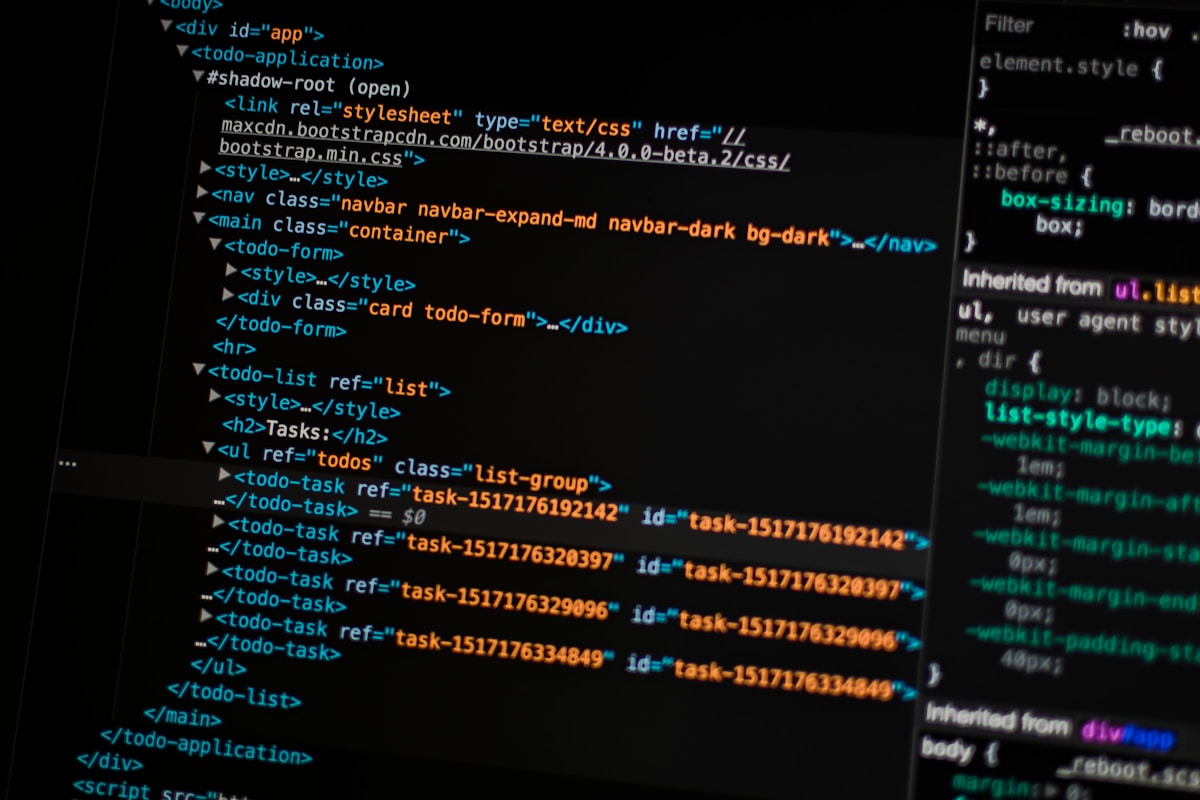
Photo by Pankaj Patel on Unsplash
The chunking decisions that make or break retrieval quality
Chunk size is a genuine tradeoff. Large chunks (800+ tokens) give the model rich context but dilute the relevance signal; the retrieved passage contains your answer plus noise.
Small chunks (under 100 tokens) are precise but lose the surrounding context that makes an answer coherent.
Set your chunk size and overlap window.
Target 256-512 tokens per chunk. This preserves cross-sentence context without duplicating entire paragraphs.Attach metadata to every chunk before indexing.
Store source file, section heading, page number, topic tag, and difficulty level as structured fields alongside the chunk text. Metadata filters at query time, "only return chunks tagged prerequisites from source X", dramatically outperform pure vector similarity when your corpus grows beyond a few dozen documents.Choose and build your index type.
Dense vector indexes (via embeddings) handle semantic similarity well. Sparse keyword indexes (BM25-style) handle exact terminology and proper nouns better. Hybrid search combines both signals, a weighted merge of semantic score and keyword match, and consistently outperforms either alone for mixed technical and natural-language queries.
Choosing between vector indexes, keyword indexes, and hybrid search
The technical consensus, reflected in production retrieval-augmented generation pipelines, is that neither pure vector nor pure keyword search is sufficient on its own. Use dense vectors when queries are conceptual ("explain the prerequisite chain for this skill").
Use sparse keyword when queries reference exact model names, article numbers, or code identifiers. Use hybrid when you cannot predict query type in advance, which in practice is almost always.
This is exactly the retrieval layer that www.skilldiscs.com builds automatically when it processes your sources into a disc. The chunking strategy, metadata schema, and index type are already resolved, so you load a structured, semantically searchable knowledge asset directly into your agent or model rather than debugging retrieval quality from scratch.
What Most Document Pipelines Won't Tell You Until It's Too Late
Four critical truths, rarely documented until your pipeline breaks in production.
Photo by Ferenc Almasi on Unsplash
The metadata debt that kills pipelines in production
Embeddings alone are nearly unqueryable at scale. The real precision comes from metadata: source file, page number, section type, date, and entity tags, attached at ingestion time, not retrofitted later.
Most tutorials skip this step entirely. When your vector store holds ten thousand chunks and you need to filter by document type or recency, missing metadata means reprocessing everything from scratch.
That is metadata debt, and it compounds fast.
Attach metadata at parse time, not after:
For every chunk you create: write source path, section heading, and content type into the payload. Retrofitting metadata onto an existing index means reingesting every document.Validate portability before committing to a vector store:
Export a sample index to raw JSON and confirm it loads cleanly into a second system. Vendor-specific formats lock your structured data to one tool, switching models means rebuilding the entire pipeline.Separate retrieval structure from learning order:
A searchable database and a learnable knowledge map are not the same thing. A database answers queries; a knowledge map tells you what to learn first, what prerequisites you are missing, and how concepts connect.
Why portability matters more than the tool you chose first
The most durable output from any document intelligence workflow is not the query interface; it is a portable, model-agnostic skill file you can hand to any LLM. That is exactly what www.skilldiscs.com packages as a disc: an LLM-ready structured asset that can be loaded into Claude, ChatGPT, or a custom agent, independent of the ingestion tool that produced it.
Structure without a learning order is still just a database. Intelligence requires the map.
4. Query, Validate, and Package Your Output for AI Agents
Most pipelines stop at indexing. That is the mistake.
A vector store that has not been stress-tested with adversarial queries is a liability, not an asset. You discover the gaps when a production agent returns a confidently wrong answer. This final stage covers three actions: validation querying, traceability checks, and packaging into a portable output your agents can actually load.
How to write queries that actually test your pipeline
Fire multi-hop queries that require connecting two or more source chunks
Single-keyword lookups only confirm surface retrieval. Write questions that force your pipeline to join concepts across sections, for example, "What prerequisite does Topic B assume from Topic A?" If the answer requires reasoning across chunks, your index either surfaces both or fails visibly.Verify traceability by checking which source chunk produced each answer
For production use, every returned answer needs a pointer back to its origin chunk. Without that, you cannot audit errors or update stale content. Confirm your pipeline returns chunk IDs or document coordinates alongside every response.Validate schema integrity by querying against your normalized structure
Run a structured query against your JSON or Markdown output, not against raw text. If entities, relationships, and prerequisites are correctly modeled, the answer should be consistent whether you query via a vector search or a direct key lookup.
Packaging your structured output as a reusable skill file
Once validation passes, bundle your knowledge graph, prerequisite map, and chunked content into a single loadable asset, the format www.skilldiscs.com calls a disc. This file works independently of the tool that built it, so you can load it directly into Claude, ChatGPT, or a custom agent without rebuilding context each session.
Www.skilldiscs.com tip: Drop your validated disc into any LLM session as a context block and open with a multi-hop question. If the model answers correctly without hallucinating source details, your structured output is production-ready.
Frequently Asked Questions
What is the difference between queryable data and a vector embedding?
Queryable data is structured information your system can retrieve, filter, and reason over -- think clean JSON, knowledge graphs, or tagged chunks with explicit relationships between concepts.
A vector embedding is a numerical representation of meaning, used to find semantically similar content. The two work together: embeddings help you locate relevant chunks, but the queryable structure around them is what lets a model actually use that content with precision.
One finds; the other delivers.
Can I turn a YouTube video into queryable data the same way as a PDF?
Yes. The source format matters far less than what you do with it after extraction.
At SkillDiscs, a YouTube video gets transcribed, segmented by topic, and mapped into the same knowledge graph structure as a PDF. The output is a disc, a portable skill file with ordered concepts and prerequisites, regardless of whether the original source was text, audio, or video.
The pipeline handles the conversion; you get the structured output either way.
How many chunks should a 100-page PDF be split into?
Somewhere between 80 and 200 chunks is a reasonable working range for a dense 100-page document, but the honest answer is: it depends on your retrieval goal, not the page count.
Chunking by semantic unit, a concept, a procedure, a defined term, almost always outperforms chunking by fixed token size. A 100-page technical manual might need 180 tight chunks.
A 100-page narrative report might need 60 broader ones. Over-chunked documents can hurt retrieval quality badly because the context around each fragment disappears.
Aim for chunks that are self-contained enough to answer a question on their own.
What file format should my queryable output be in for use with ChatGPT or Claude?
Structured JSON is the safest universal choice. Both ChatGPT and Claude handle it cleanly, and it keeps your metadata, concept labels, prerequisites, and source references intact alongside the content.
Markdown files work well too, especially for Claude, which handles long-form structured text naturally. What you want to avoid is raw unformatted text dumps: the model receives your content but loses all the relational structure that makes it actually useful.
SkillDiscs outputs disc files designed to load directly into either model without reformatting.
Do I need a database or can I query structured JSON directly?
For small to medium knowledge bases, structured JSON queried directly is perfectly viable, with no database required.
A flat JSON file with well-labeled keys and a consistent schema can be passed straight into a model's context window or processed with lightweight scripts. Where a database becomes worth the overhead is scale: hundreds of documents, concurrent users, or latency-sensitive retrieval.
At that point, a vector store or a simple document database earns its complexity. For a single learner or a focused agent use case, clean JSON and a good prompt structure will take you further than most people expect.
Turn Documents Into Queryable Data the Right Way
The pipeline is real work, but it only needs to be built once, if you build it correctly the first time.
Parse, normalize, chunk, index, package: each stage compounds on the last. Skip one, and your retrieval layer inherits the debt silently, surfacing as missed answers and broken context weeks later.
The concrete next step is straightforward. Take the source you've been meaning to process, that dense PDF, that documentation set, that video series, and run it through a tool that handles the map, not just the storage.
Load it at SkillDiscs, and instead of a folder of chunks you'll get a structured knowledge graph, a sequenced learning path, and a portable skill file ready to hand to any model.
Need to turn documents into queryable data without rebuilding the pipeline every time? SkillDiscs automates the prerequisites, the ordering, and the LLM-ready output, free to start, with a tutor tier at 19 euros when you're ready to go deeper.
The map already exists. You just need the right tool to surface it.